Studies in Bolivia
An industrial building with a freight elevator, located in the Poblenou neighborhood on Bolivia Street. 200 square meters of open space.
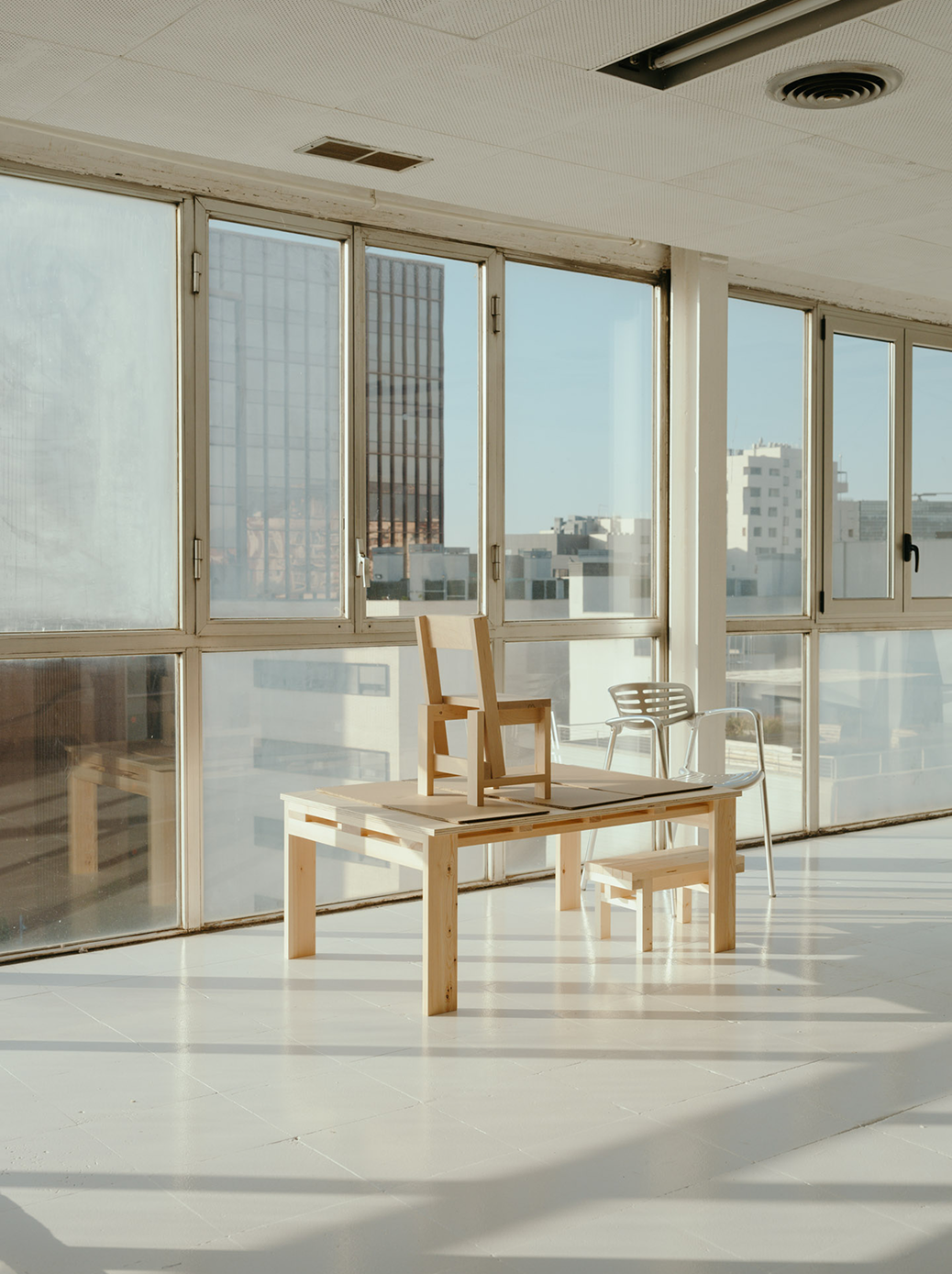
A fifth-floor space with east-facing windows; you can almost see the sun rise over the sea.
Estudios Bolivia is the space shared by Jaume Ramírez, Júlia Esqué, Marc Morro, and Mark Bohle, along with other friends and creatives who come and go. There was never a clear intention to form a collective, and perhaps that is why the studio has been constantly changing since they moved in 2021. “There is no fixed structure or specific way of doing things.” “Everyone works on their own projects,” they say, “but a lot happens between us that we don’t plan.”
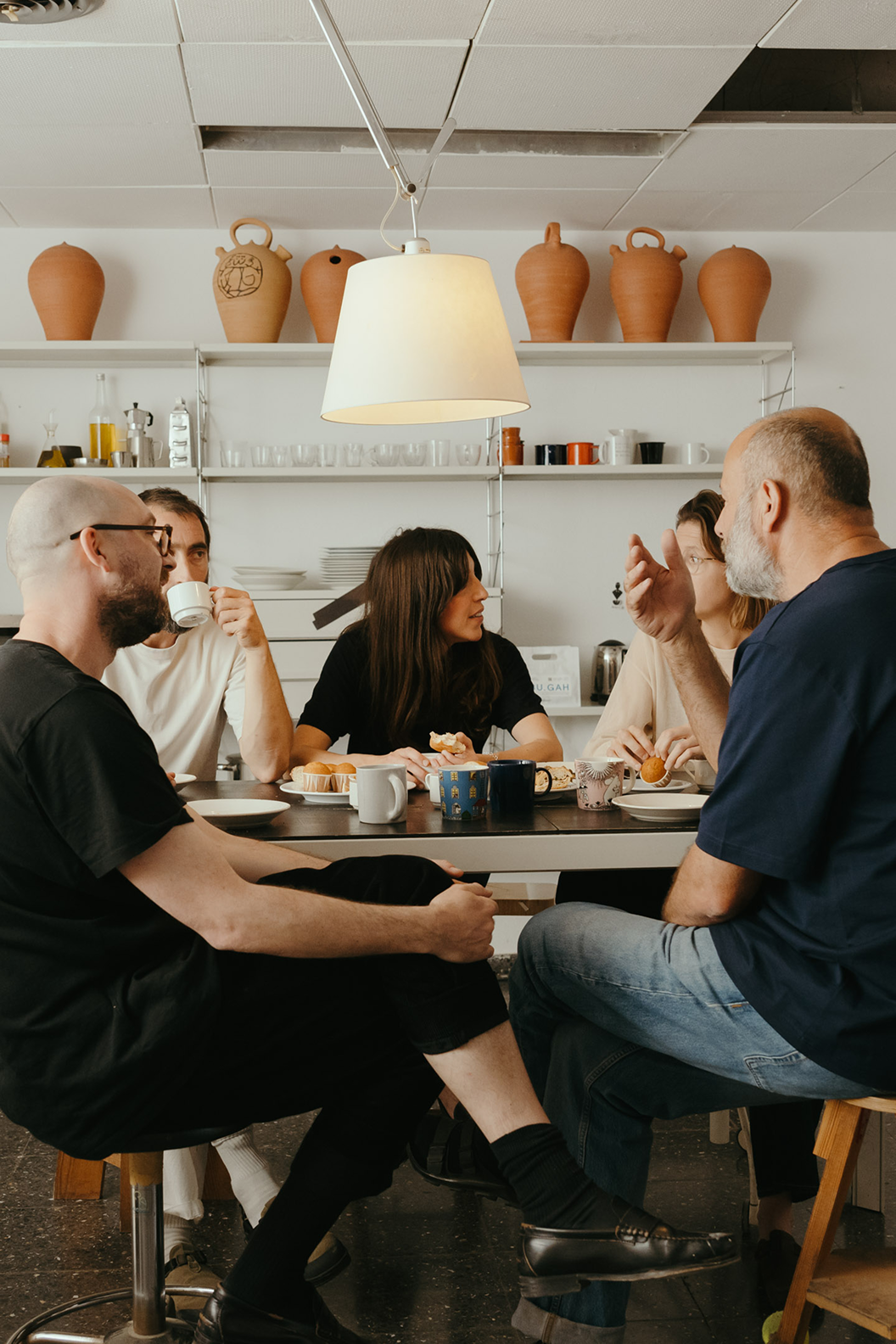
We had coffee with them to talk about the space, how they work, and everything that happens in between.
How did Estudios Bolivia get started?
Júlia and I used to meet up every now and then for coffee and to catch up. We both worked in different spaces and neighborhoods around the city. Our respective studios had become too small, so we started looking for a new one together. We saw a few spaces that didn’t quite work for either of us. One day as I was leaving the studio—I worked on the fourth floor of the same building where we met—I saw on the landing that someone was moving in. I asked them if they were moving in or moving out. I asked them which floor. I asked if I could take a look. I called Júlia. I called the agency. We snagged it that very same day.
Mark Bohle shared a studio with Júlia; we offered it to him, and he signed on immediately. A short video was all it took for him to say yes. At the same time, I used to meet up with Marc Morro a couple of times a month for lunch. His studio was very close to ours. He only had to move his things a couple of blocks.
It didn’t start out as a “let’s create something together” project, but rather as a space that just emerged, and we’ve gradually joined in.
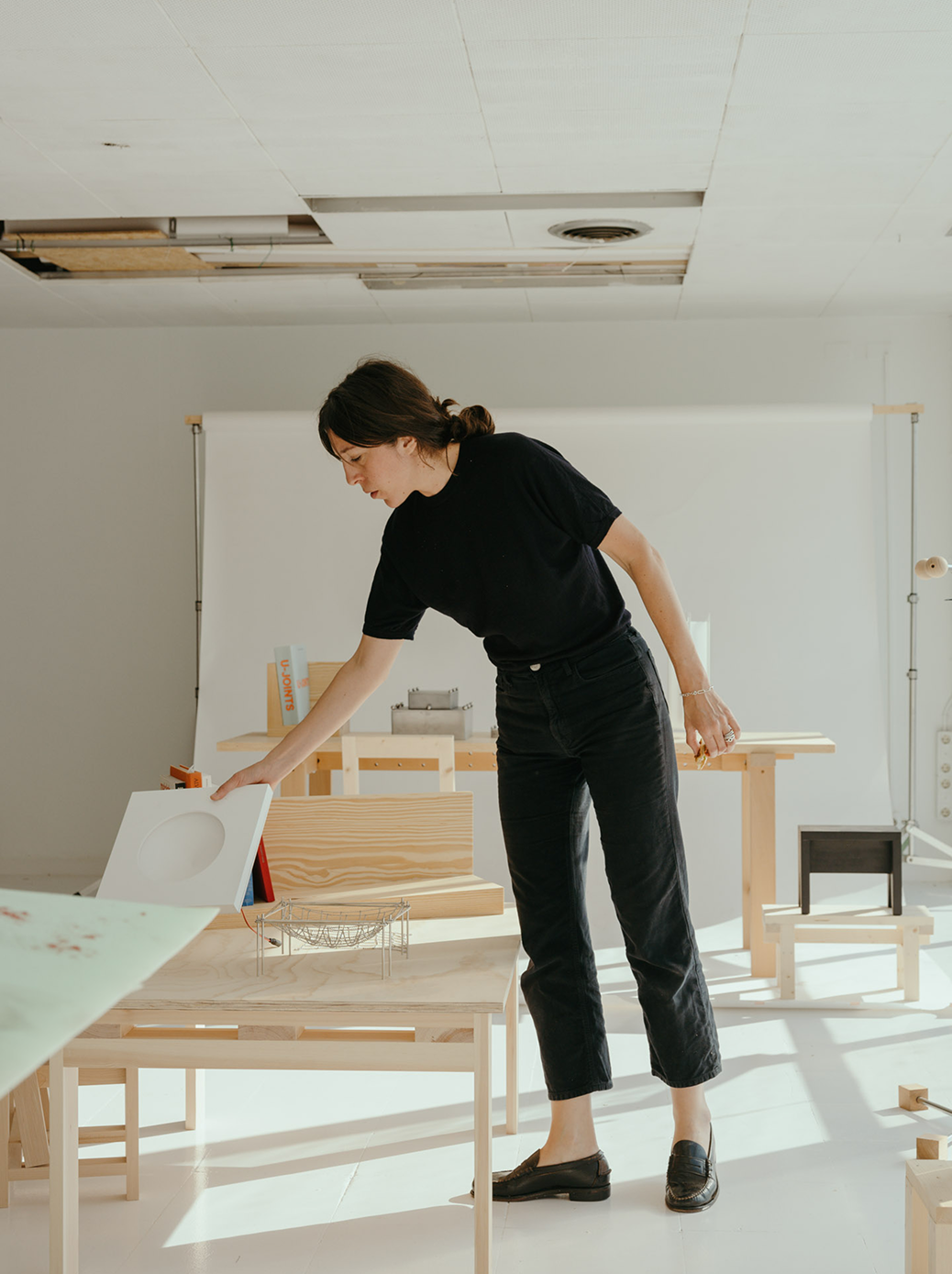
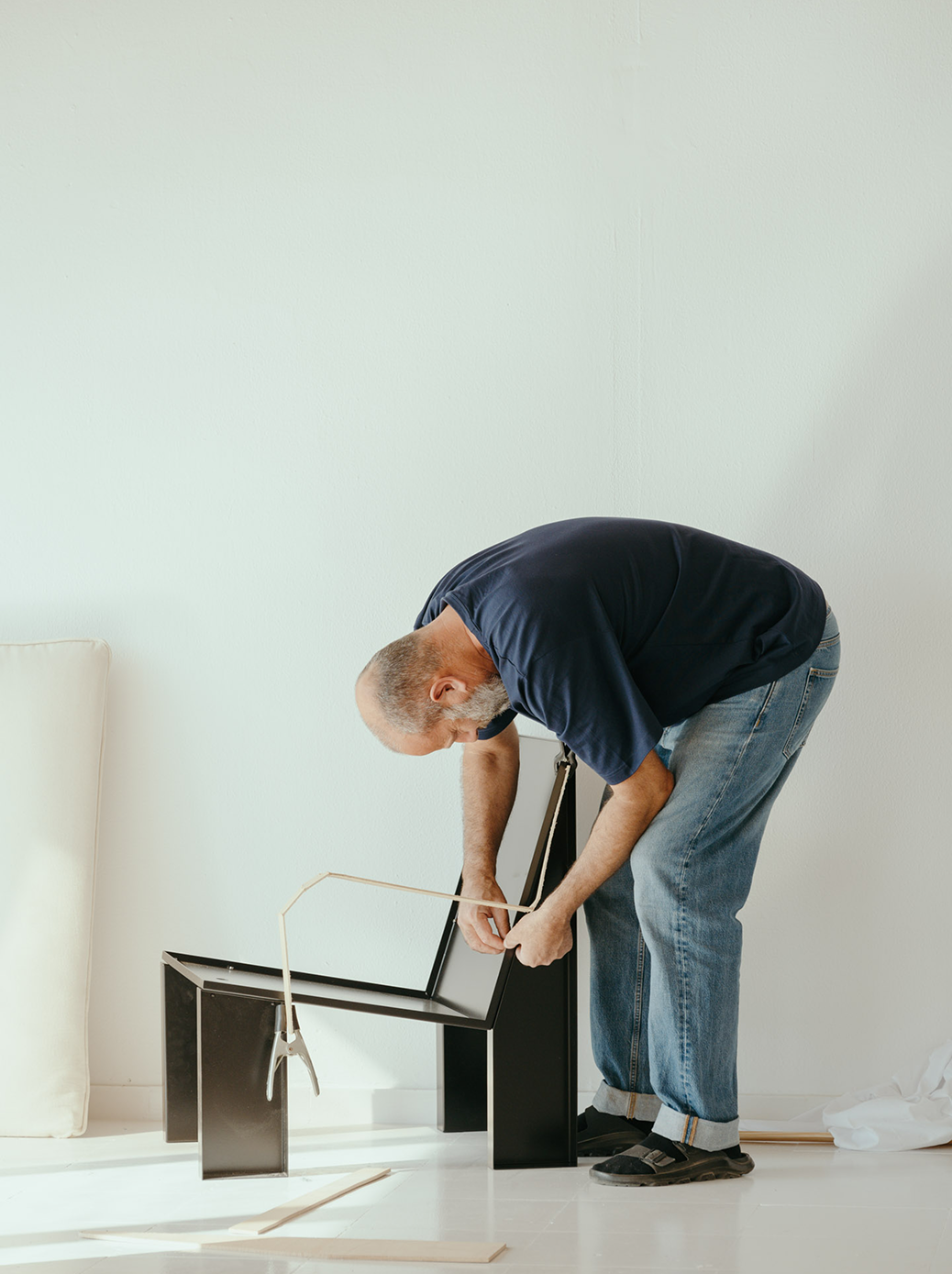
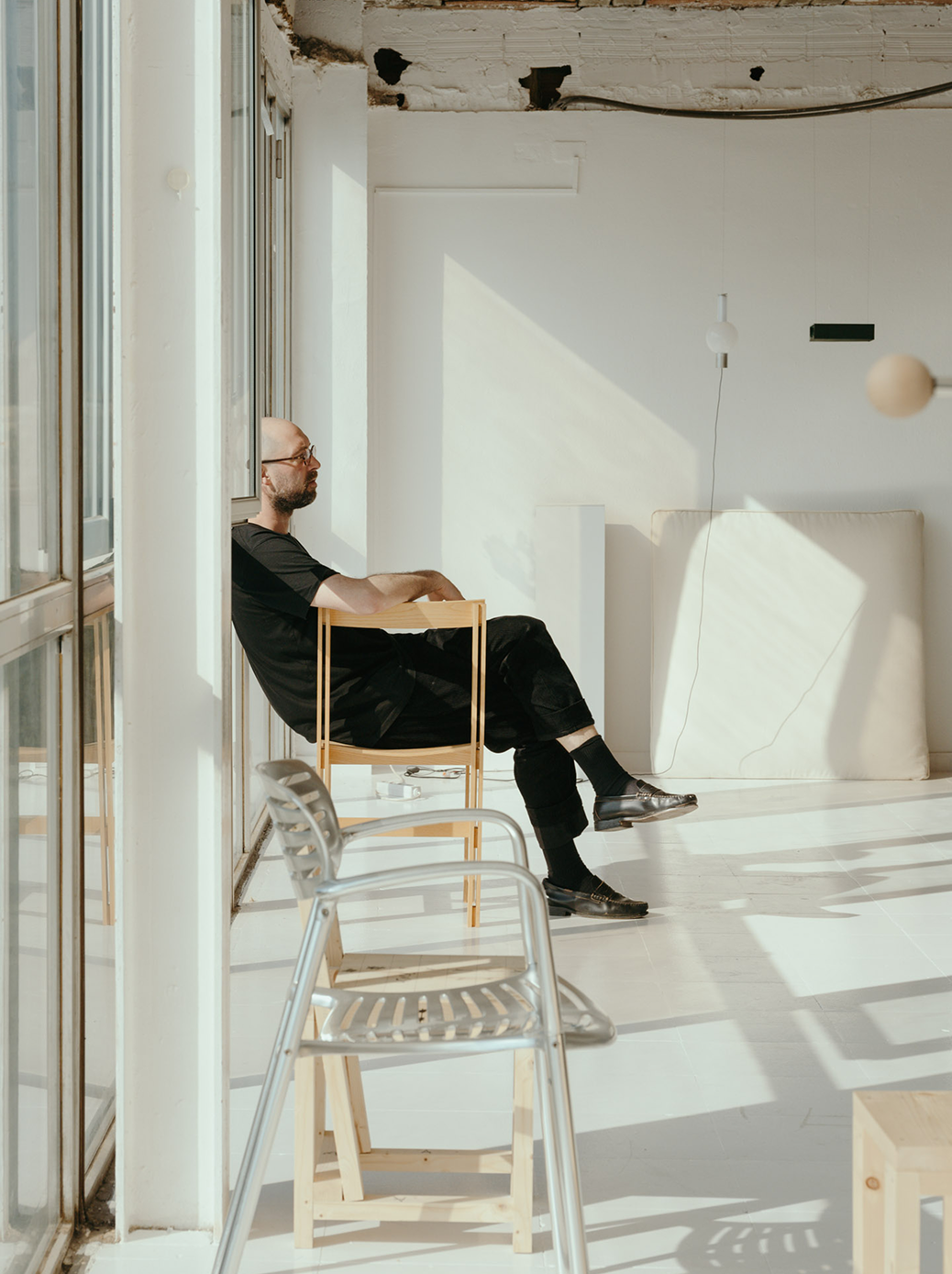
The space
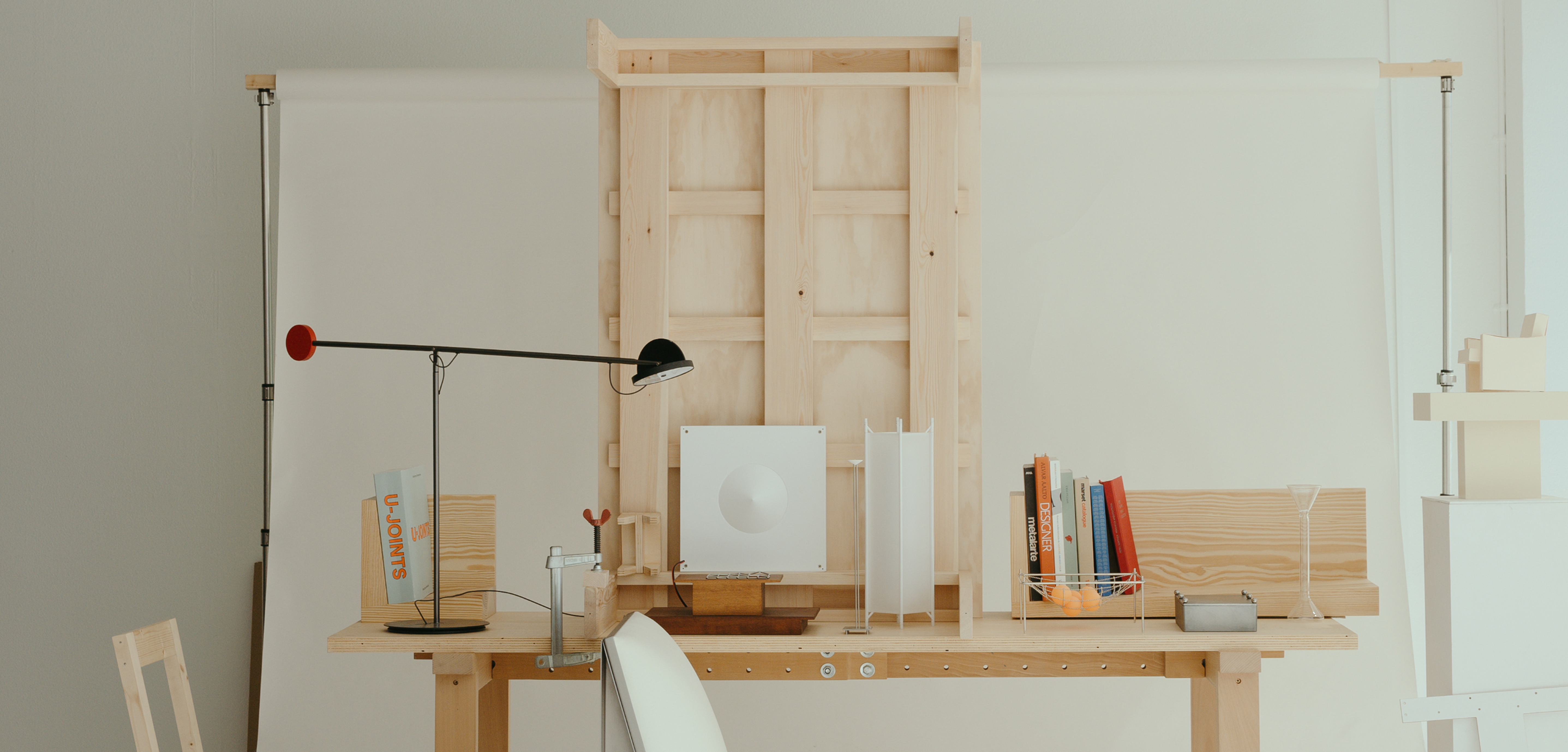
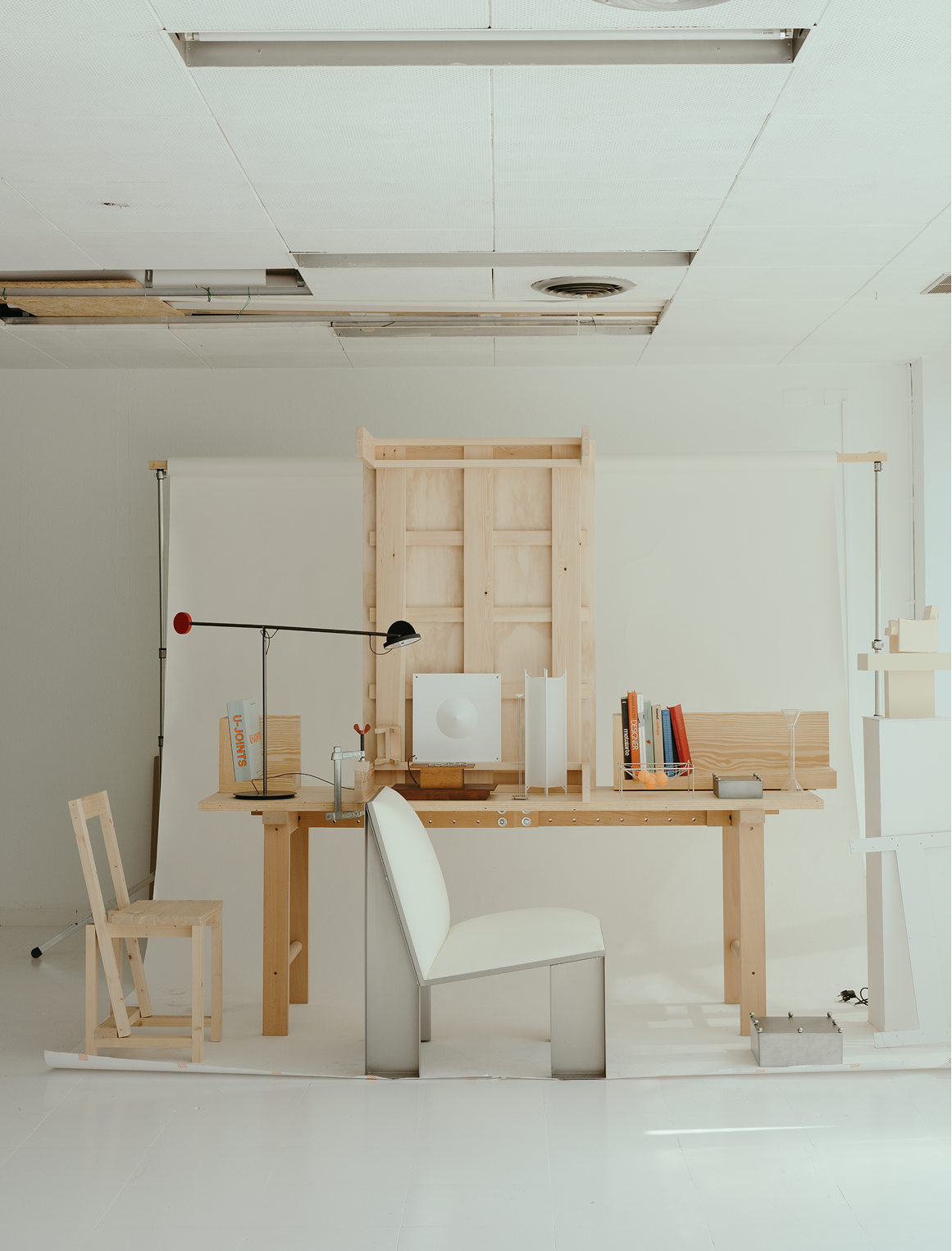
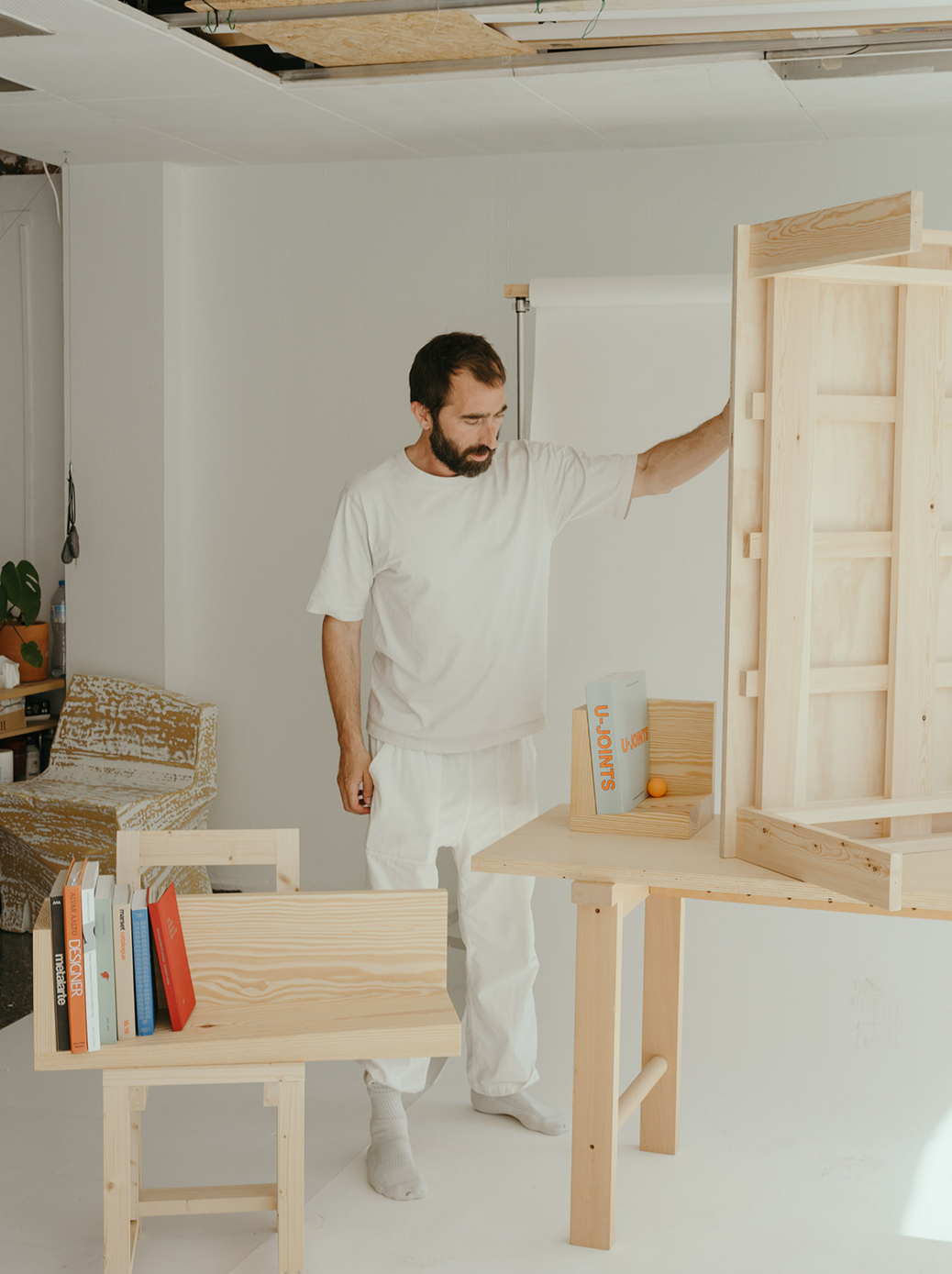
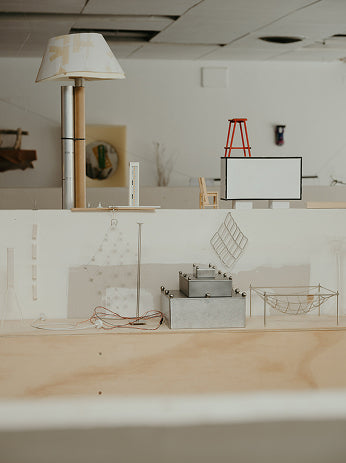
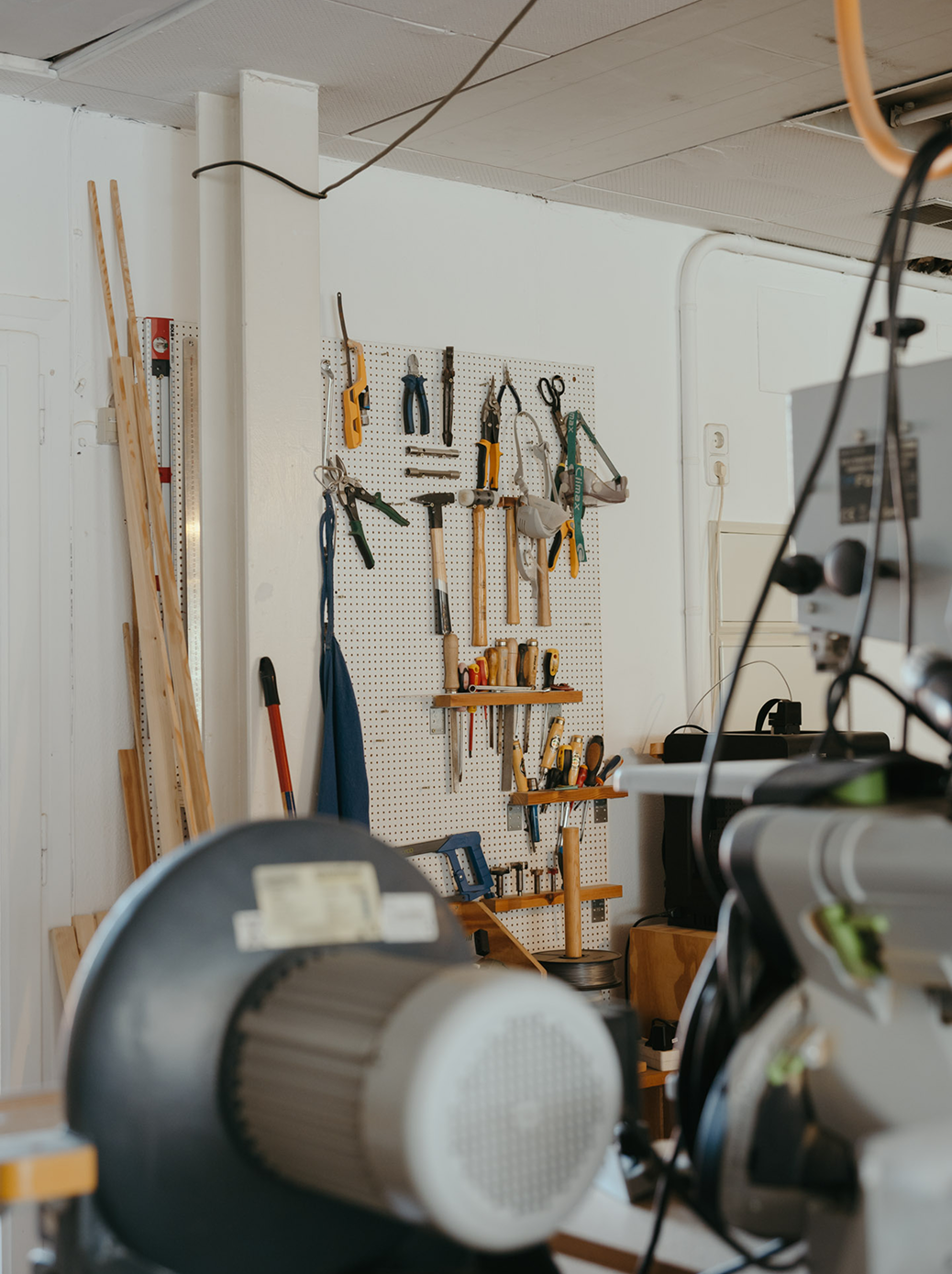
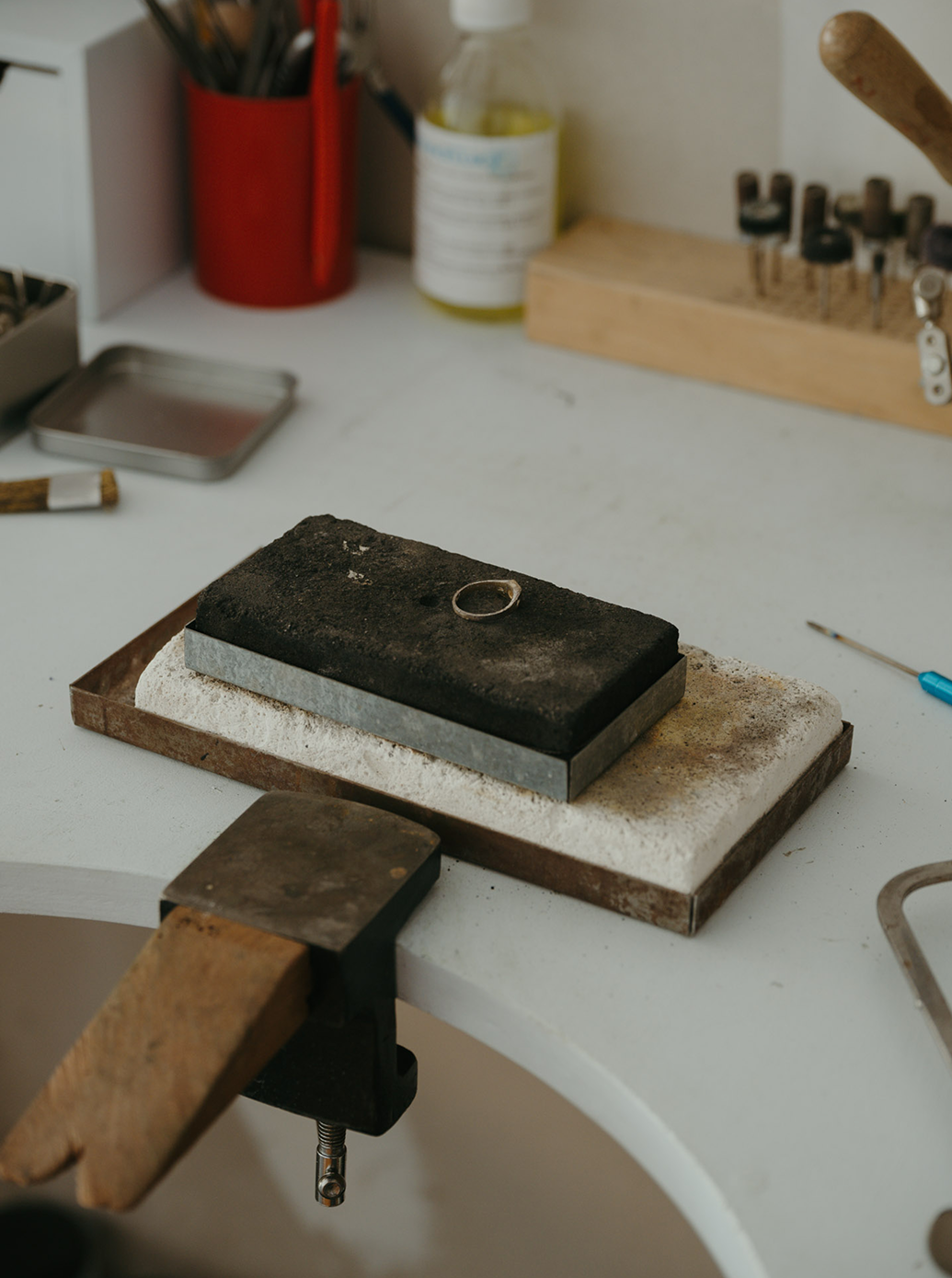
The studio is divided into several areas that have evolved over time: one area serves as a workshop and kitchen, another houses the workbenches, and the open space is where prototypes or works in progress are kept.
The white space actually shifts constantly depending on what we’re doing, but it’s where the light is best and where the most hands-on work happens—which is really what we enjoy doing most. Just by painting it white, there’s theoretically a rule that’s never followed, but the fact is, that’s where you have the materials you’re working with.
How do you influence each other?
We have quite different ways of thinking, but at the same time there’s something we share that makes everything come together. There are many connections between what each of us does. I think we feel very supported and very supportive of one another. Even though we each do our own thing independently, things can come together—joint projects sometimes happen—but above all, our independent projects really involve the others.
Yes, we’re a team of four. You’re constantly learning from others because you see how they work, how they solve problems… and that ends up becoming part of your own process almost without you realizing it. There are many tools that come from others and help you or change the way you work.
The name
We’re not a collective, nor do we work collectively, although that might happen internally. We’re always called Bolivia because we’re in Bolivia. There are like 10 [WhatsApp] groups for Bolivia: “Estudios Bolivia,” “Bolivia,” “Bolivia”… And there was a moment when we said, “Okay, let’s just call it ‘Estudios Bolivia’ because there was one of the many collaborative projects we could do that involved us making a series of individual objects together but taking them collectively to the Materia store.” We said, “Hey, why don’t we take advantage of this now and tweak the name a bit so it sounds like we’re working together, instead of saying ‘Jaume, Marc, Julia, and Mark are doing this’?” But we never say “I’m at Estudios Bolivia” or “I’m going to Estudios Bolivia”—I mean, I’m in Bolivia or I’m at the studio.
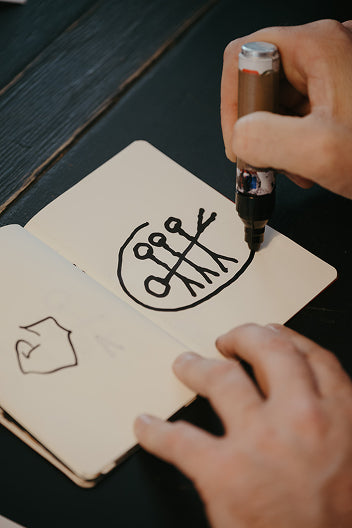
There isn’t really an official one, let’s say. Sometimes we mull over what it would look like, or whether it would make sense to create a logo, but then it never happens. Mark drew a really cool little sketch that shows three of us holding up a fourth, and it sums this up pretty well: three will always hold on, no matter what—you could be any of the four; you could be the one holding on or the one being held up. If one person had to hold up three, we wouldn’t be here anymore. The logo defines us really well; he drew it just like that in a day. Estudios Bolivia—this is one and this is three, depending on the day.
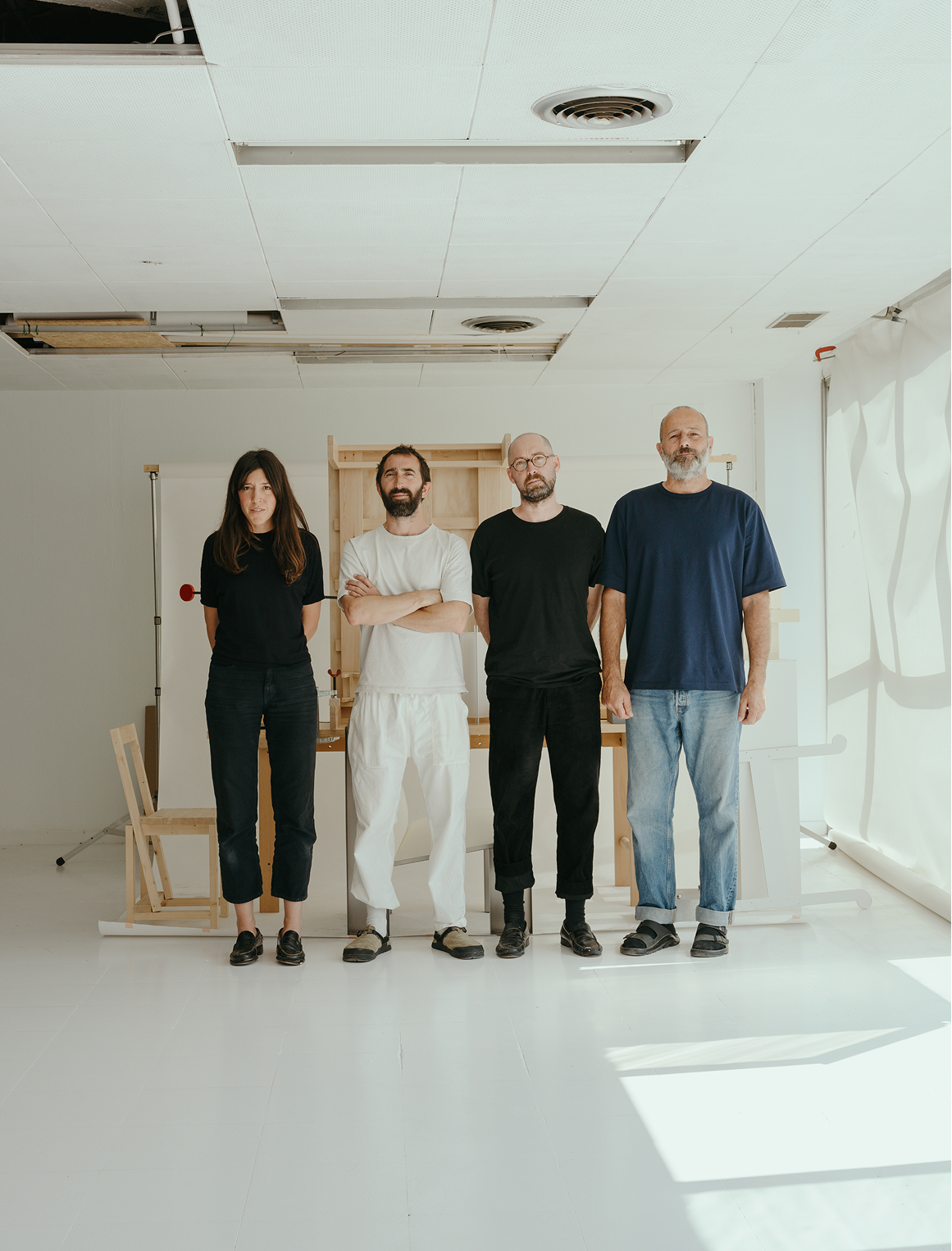
Júlia Esqué, Marc Morro, Mark Bohle, and Jaume Ramírez
How has the dynamic of the space changed?
We used to spend hours and hours here. We’d arrive early, leave late, and watch the sun go down… Some Mondays we’d end up having a few beers late into the night, and Tuesdays were always a bit chaotic. Now it’s much quieter. We arrive after dropping off the kids and don’t see each other as often as we used to, but the place still feels very much like home.
It's hard to find a pattern because everyone has their own schedule and projects, but even so, we're constantly running into each other.
We interrupt each other all the time, but not in an annoying way—it’s just a natural part of how this space works.
What are mornings like in Bolivia?
I usually get here around 9:15, which is pretty standard since I drop my son off at school. Sometimes when I get here, the door is locked, and that’s a bummer because it means I’m the first one here and I have to unlock it. But there’s one really cool thing: when you open the door and it’s already open, and there are two or three people having coffee. It feels kind of like home.
I also think it’s really nice when food shows up on the table every now and then. Things are pretty tight right now, but when someone brings something for us all to share, it ends up being a bit like what Marc says, and that’s really nice. When you walk in and the door is open and there are two people having coffee, it’s a real pick-me-up. No matter what kind of work you have that day, for those five minutes, you’re just there.
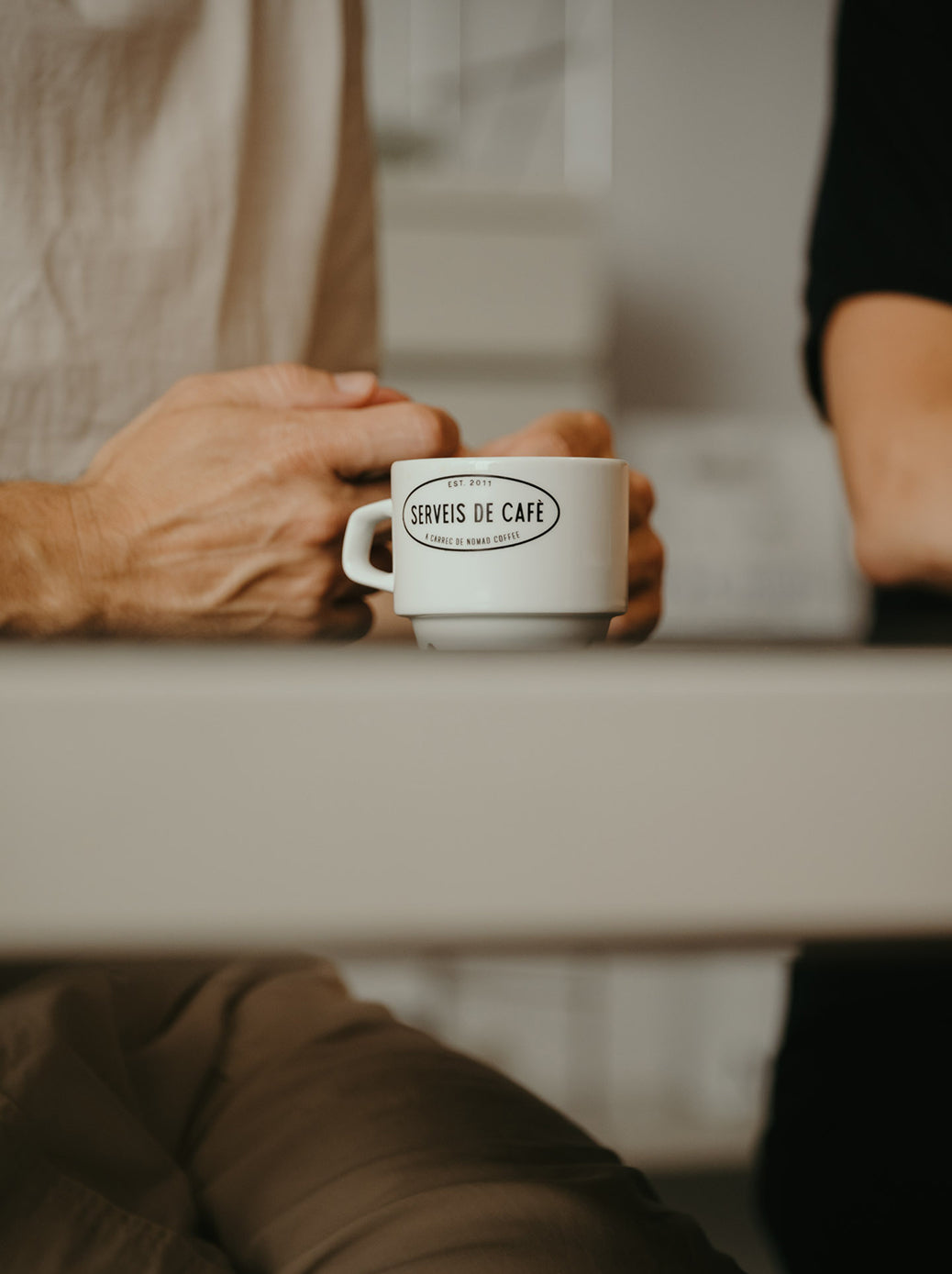
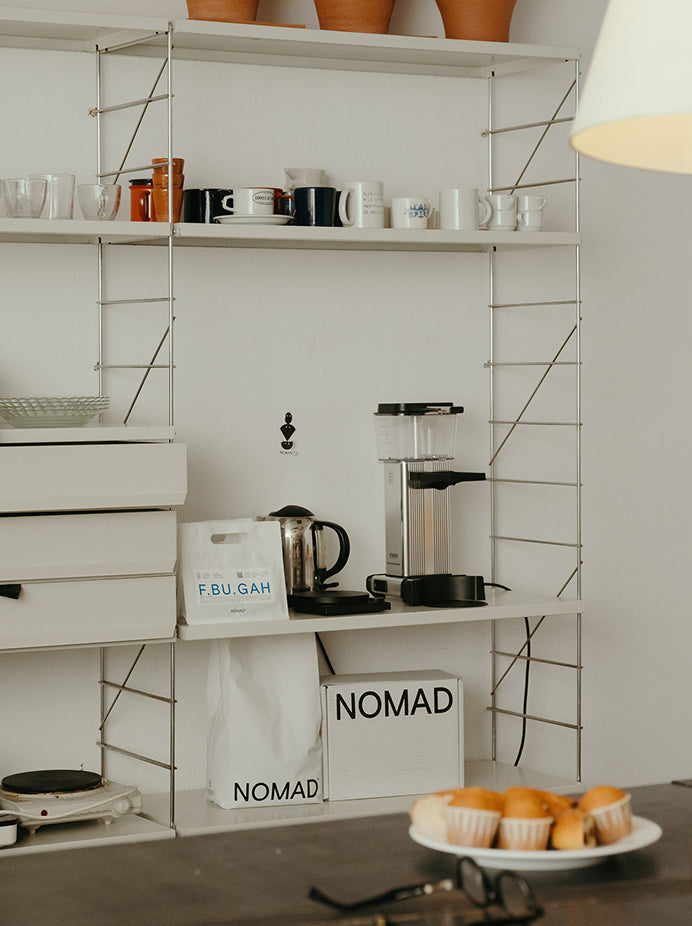
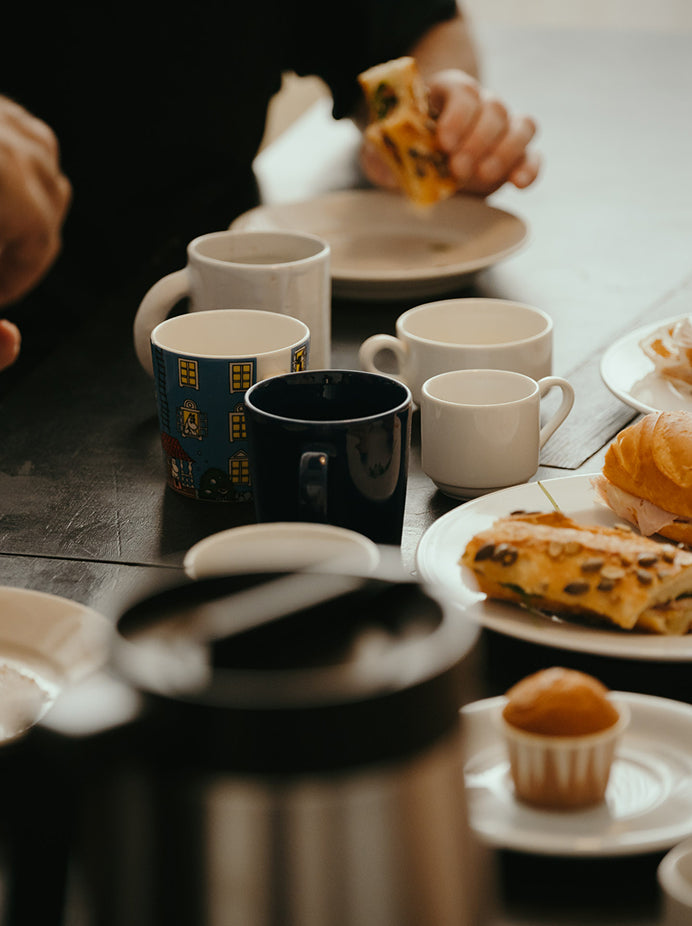
So, does the coffee end up spilling without meaning to?
We almost always meet up for breakfast—maybe not everyone, but there’s always someone. When
When one person makes coffee for the others, the same question always comes up: “Which cup would you like?”
"Small or large?" "Long or short?" One Christmas we did a Secret Santa, and each
You had to give away a mug. Many of the ones we still use today come from there. Jaume
gave me a pair of Moomin mugs from Finland. He always says that the mug is from
Kaj Franck, and you can buy them at the supermarket there. They're the ones everyone
wants. Morro usually uses Xavi Mañosa's, although it can sometimes vary. We have another one
with the German flag—I don't remember where it came from—and it's usually only for special occasions
special editions. Another one painted by Clàudia Ros featuring the members of Bolivia at that time.
That thing about the mugs is something else.
Marc Morro:
Industrial designer - 3 cups of coffee a day
Júlia Esqué:
Designer - 4–5 cups of coffee a day
Mark Bohle:
Illustrator - 3 cups of coffee a day (doubles)
Jaume Ramírez
Industrial designer - 3 cups of coffee a day